ReadPaper Blog
DrugGen 2: A Disease-Aware Language Model for Enhancing Drug Discovery
DrugGen-2 addresses a limitation in AI drug design: most generative models condition molecules on protein targets or broad chemical properties while ignoring disease context, even though the same target can have different therapeutic implications across diseases. The paper introduces a GPT-2-based molecular generation model conditioned on both MeSH disease ontology and target protein sequence, and reports stronger molecule uniqueness, validity, similarity to approved drugs, predicted binding affinity, and docking support than DrugGPT and DrugGen in diabetic nephropathy targets.
Source: DrugGen 2: A disease-aware language model for enhancing drug discovery
Why Target-Only Drug Design Falls Short
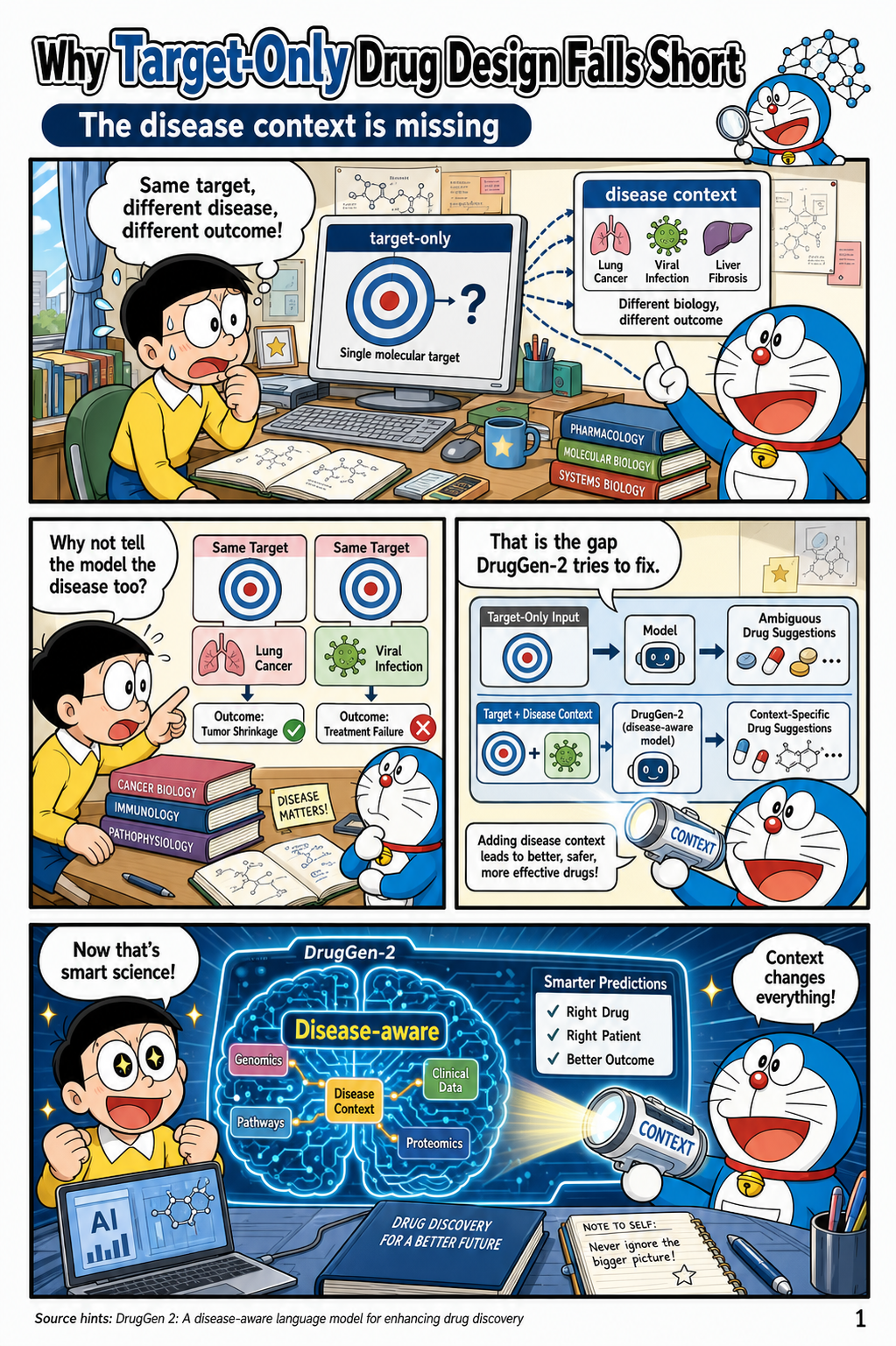
The paper motivates DrugGen-2 by arguing that target-only molecular generation misses a clinically important source of variation: disease context. Existing models such as DrugGPT and DrugGen can generate ligands from protein-related or molecular-property cues, but the authors note that a protein target may participate in different pathways depending on the disease state. The introduction uses PPARγ as an example, because its activation can support metabolic effects in type 2 diabetes while producing different implications in colon cancer through interactions such as the Wnt/β-catenin pathway and disease-specific metabolic conditions. This gap matters for personalized therapeutic development, drug repurposing, and de novo design because a molecule optimized for a target in isolation may not be optimal for the disease biology in which that target is embedded. DrugGen-2 is proposed as a disease-aware alternative that explicitly couples disease ontology with target sequence during molecular generation.
DrugGen-2 Adds Disease + Target
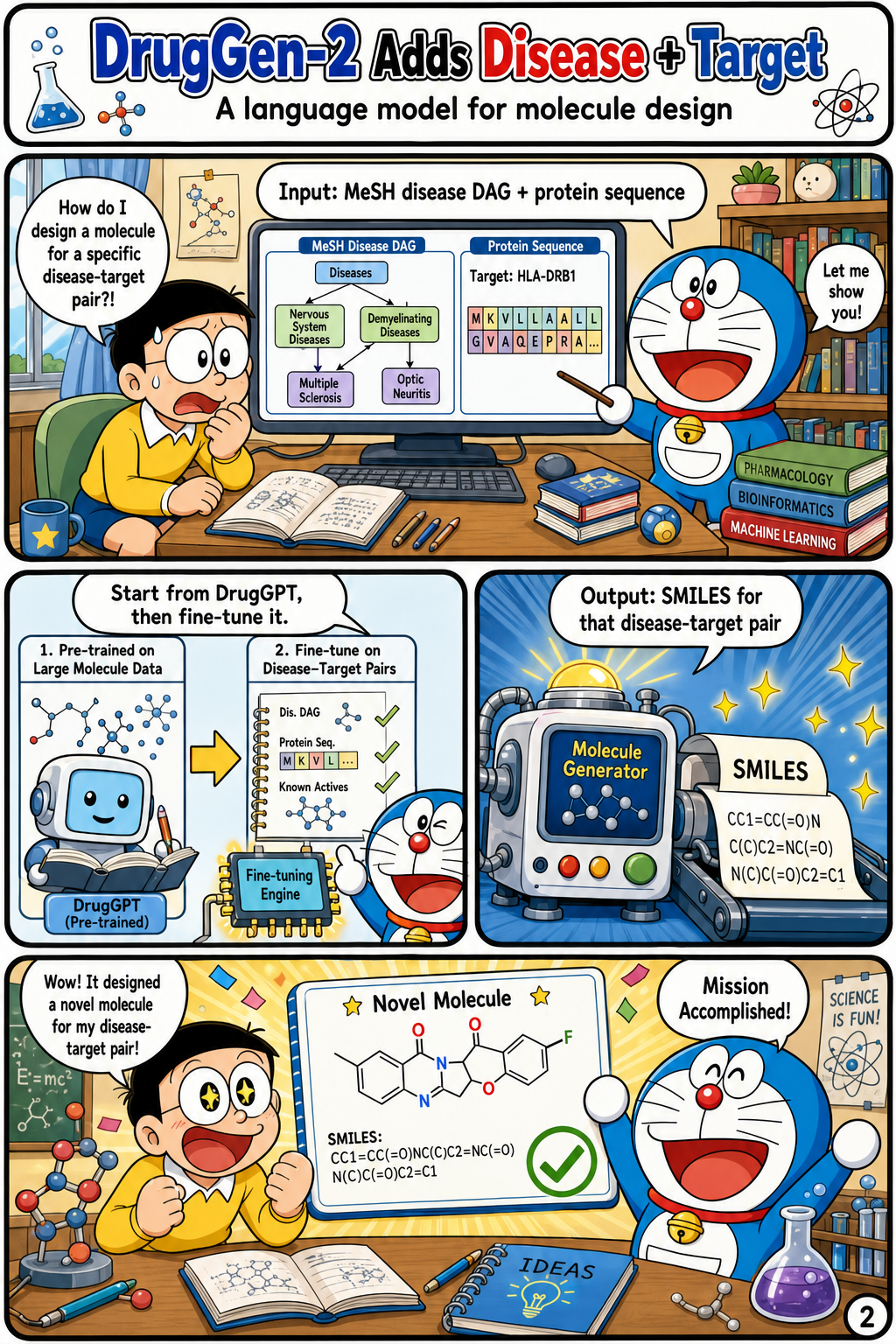
DrugGen-2 extends a pretrained DrugGPT-style GPT-2 ligand generation model by conditioning generation on both a disease MeSH directed acyclic graph identifier and a target amino acid sequence. The intended output is a SMILES representation of a small molecule tailored to a specific disease–target pair, rather than a molecule designed only around a target or generic property profile. The authors built the model using a curated dataset linking approved drugs to their associated diseases and targets, drawing on disease ontology structure and protein sequence information. Supervised fine-tuning aligned the model with observed disease–target–drug relationships, so the language model learned molecular strings in the context of biomedical annotations rather than as isolated chemical sequences. This design makes the model relevant to both de novo drug design and drug repositioning, because approved-drug relationships provide a scaffold for learning therapeutically plausible chemical patterns.
Training: Two Steps, Three Rewards
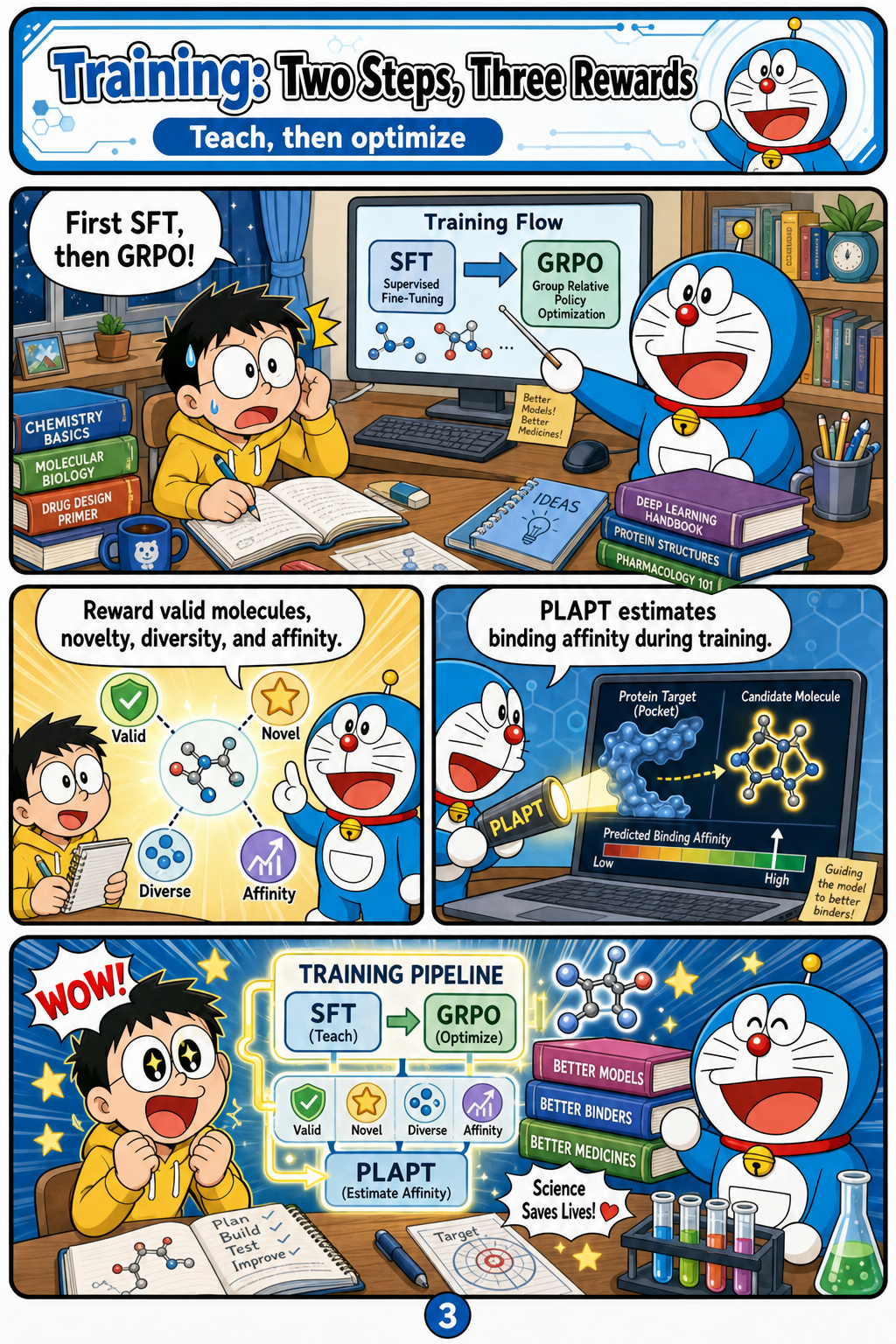
The training strategy combines six epochs of supervised fine-tuning with ten epochs of reinforcement learning using group relative policy optimization, or GRPO. The reinforcement stage uses reward functions for predicted binding affinity, molecular diversity, and novelty relative to approved drugs, while chemical validity is supported through a customized invalid-structure assessor. Binding affinity is estimated with PLAPT, a protein–ligand binding affinity prediction model based on pretrained transformers, allowing the training loop to reward molecules predicted to bind well to the supplied target. Diversity is evaluated within each training batch, while novelty discourages the model from simply reproducing approved compounds. The paper reports that these reward functions gradually converged during GRPO, which the authors interpret as evidence of stable optimization toward valid, novel, diverse, and high-affinity molecular generation.
What Happened in the Tests?
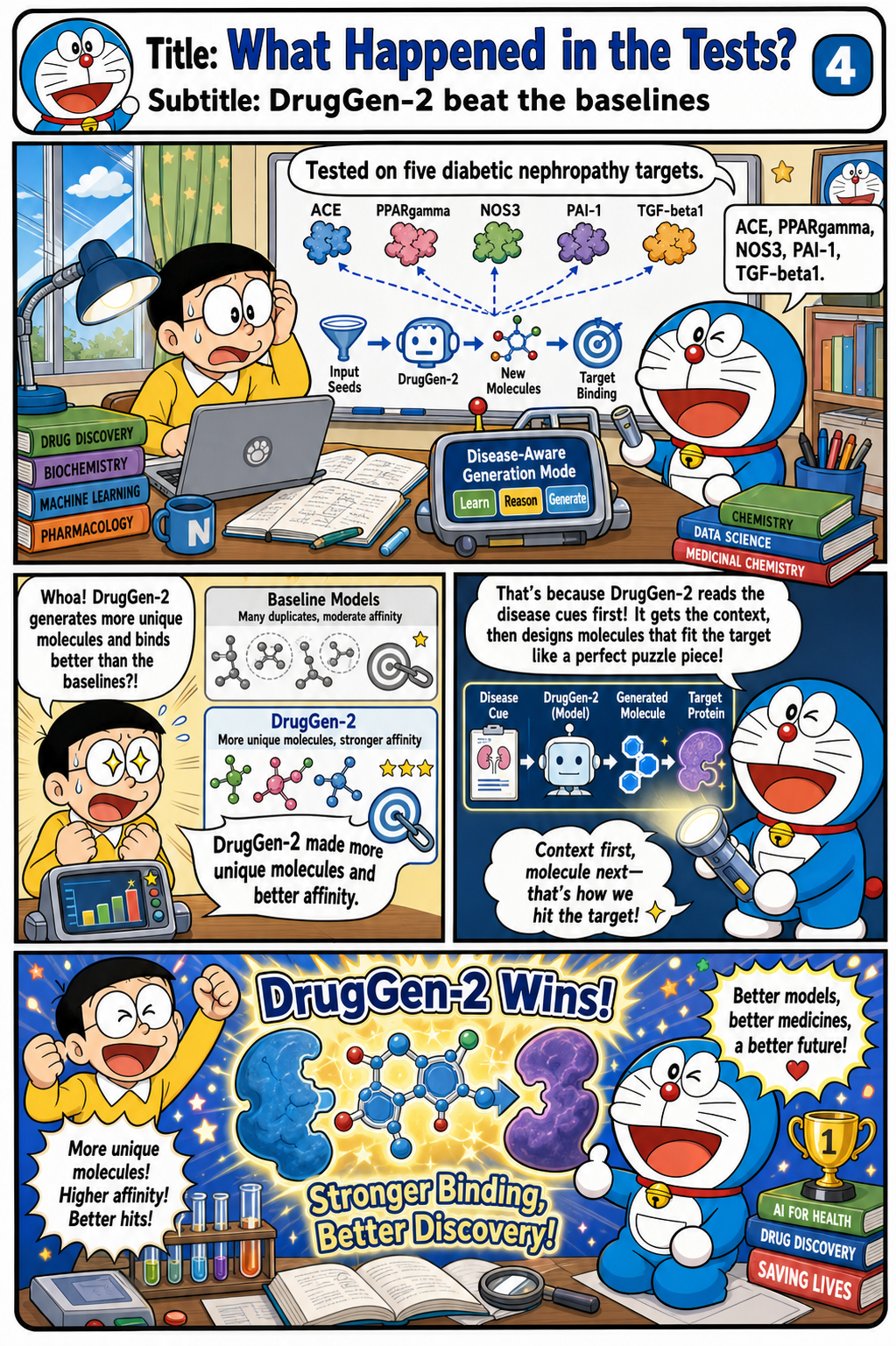
The paper evaluates DrugGen-2 on five targets associated with diabetic nephropathy: angiotensin-converting enzyme, PPARγ, nitric oxide synthase 3, plasminogen activator inhibitor-1, and transforming growth factor beta 1. These targets were identified using DisGeNET and the DrugTar algorithm, and diabetic nephropathy was represented through four MeSH DAG entries, enabling separate disease-ontology-conditioned evaluations. DrugGen-2 was compared with DrugGPT and DrugGen on generation capacity, chemical validity, structural similarity to approved molecules, and predicted binding affinity. In the task of producing 500 unique candidates, DrugGen-2 generated 409 to 444 unique molecules across targets and MeSH configurations, compared with 50 for DrugGen and 219 for DrugGPT in the reported medians. The model also achieved near-perfect validity, with median valid-generation values reported between 99 and 100 percent, and its molecules showed higher similarity to approved drugs, with a reported similarity around 0.70 compared with lower values for the baselines.
Takeaway: Disease-Aware Design Works
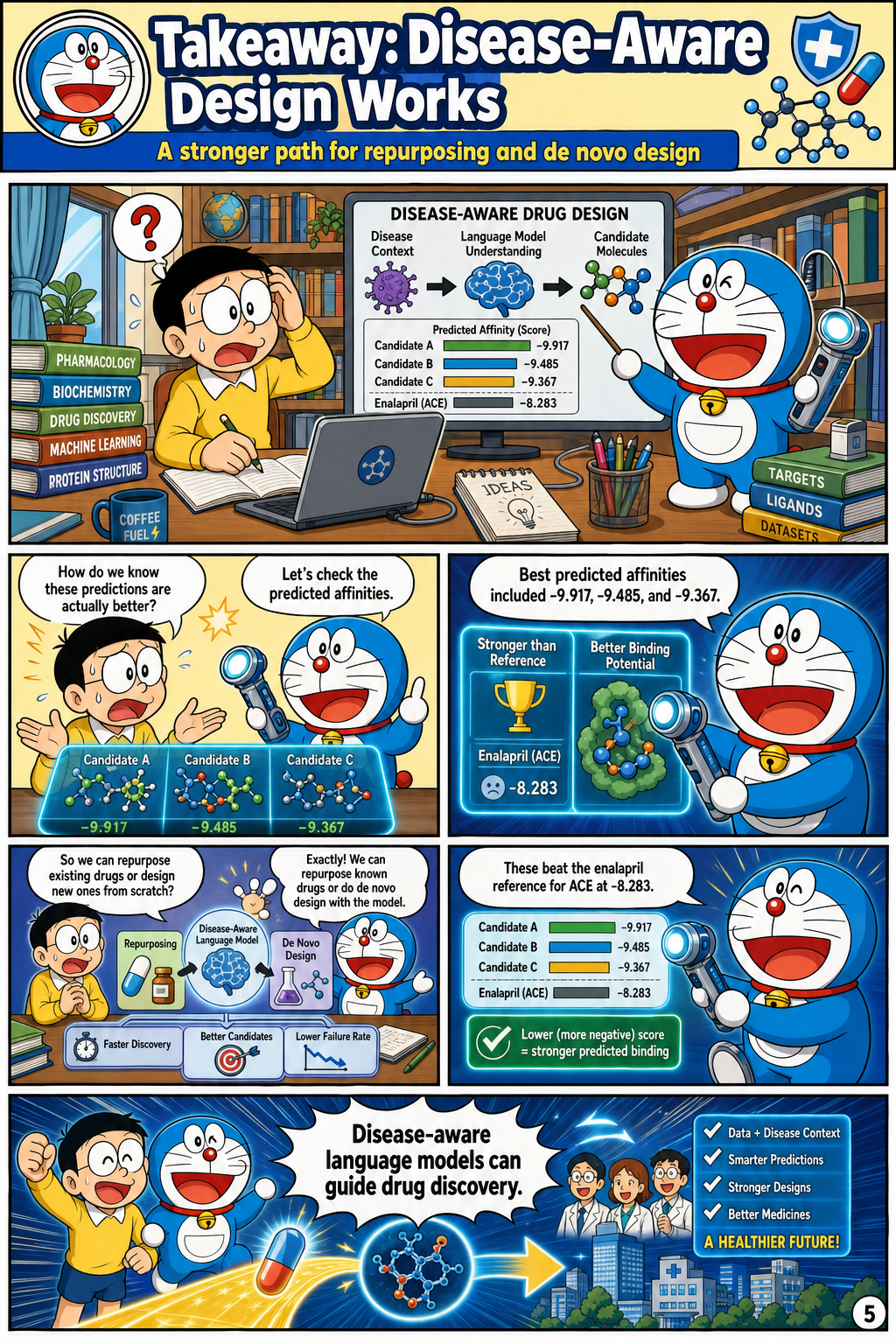
The strongest implication of the paper is that adding disease context can improve molecular generation beyond target-aware language modeling alone. DrugGen-2 consistently outperformed DrugGPT and DrugGen in PLAPT-predicted binding affinity across the five diabetic nephropathy-associated targets, supporting the claim that disease-conditioned inputs can guide the model toward more biologically relevant molecules. Molecular docking analyses further supported the computational screening results, including candidate ligands with predicted affinities of -9.917, -9.485, and -9.367 that exceeded the ACE reference drug enalapril at -8.283 in the reported comparison. The authors frame these findings as evidence that disease-aware generative models can better account for the interplay between disease mechanisms, molecular targets, and ligand design. The paper also positions DrugGen-2 as a practical platform for drug repurposing and de novo design, while its limitations imply that experimental validation remains necessary before generated candidates can be considered therapeutic leads.